Prompt one chapter
The model forgets decisions made in earlier sections.
SciNest is a Windows desktop workspace that connects to your own ChatGPT, DeepSeek or Claude API key to write complete long-form papers. Build an editable outline, upload your references and select source materials, then generate a full connected draft chapter by chapter. Revise individual chapters or paragraphs without regenerating the entire document. Free plan includes one active project with unlimited AI generations.
OUTLINE FIRST · MATERIALS BOUND · REFERENCES INCLUDED
Select the materials that matter, shape the outline, connect the references and generate a coherent long-form document in one run—without prompting one chapter at a time.
Windows desktop · Bring your own AI key · Project files stay local by default

THE PARAGRAPH-BY-PARAGRAPH TRAP
Generic chat tools lose structure as the conversation grows. You end up copying fragments, rebuilding headings and repairing contradictions between sections.
The model forgets decisions made in earlier sections.
References, terminology and argument structure begin to drift.
Every new chat needs the same materials explained again.
The final job becomes merging and rewriting AI fragments.
THE OUTLINE IS THE CONTROL LAYER
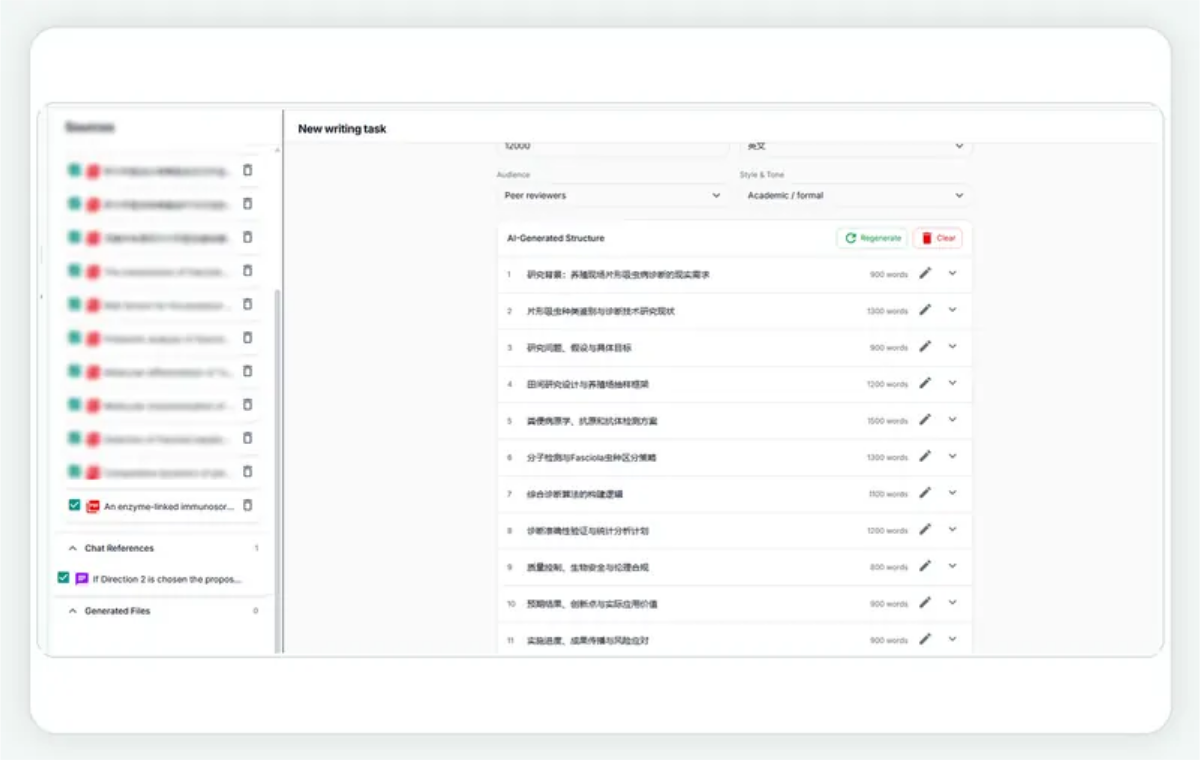
The real task screen assigns a word target to every chapter and keeps the generated structure editable before the document expands.
MATERIALS AND REFERENCES STAY ATTACHED
Expand a chapter to review its goal, refine the points it must cover and keep the evidence and materials area attached to that section.

LONG-FORM MEANS ONE CONNECTED DOCUMENT
The real editor keeps the Smart Outline, complete document and selected-text AI Edit in the same writing workspace.
ONE CONTROLLED WRITING WORKFLOW
Choose the papers, notes, existing draft, rubric and reference library that belong to this task.
Define the chapters, section goals, order, scope and target length before the document expands.
Connect source context to the sections where it is needed instead of treating all uploaded files as one undifferentiated pile.
Expand the approved structure into a connected academic document rather than prompting one paragraph at a time.
Edit a chapter, rewrite a passage or respond to feedback without discarding the confirmed structure.
KEEP THE DOCUMENT. CHANGE THE PART.
After the long-form draft exists, work on the exact chapter or passage that needs attention while keeping the approved structure and the rest of the document intact.
FAQ
Yes. The writing workflow is designed to produce a connected long-form draft from an approved outline rather than forcing you to prompt one paragraph at a time.
Yes. You can review chapter structure, section order, scope and writing goals before expanding the document.
You select the project materials and references that belong to the writing task. The draft is built from that selected context rather than a blank prompt.
The workflow carries source and reference context into the writing process so citations and evidence can remain connected to the relevant sections. Users must still verify every citation and institutional requirement.
Yes. You can continue editing the document and target specific chapters or passages instead of regenerating the entire draft.
No. Users remain responsible for facts, references, originality, research quality and institutional AI-use rules.
Build the outline, bind the materials and references, then generate the connected draft in one workflow.
Generate my long-form draft ↗